Orthopaedics
ACL Tear Treatment
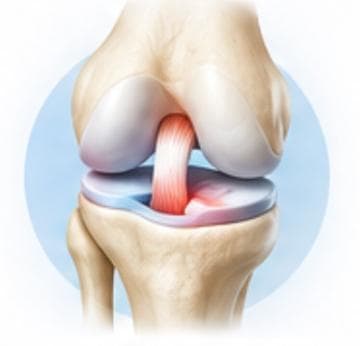
An anterior cruciate ligament (ACL) tear is a common knee ligament injury, often from sports, treated with either structured rehabilitation or ACL reconstruction surgery depending on the severity of the tear and the patient's activity demands.
Ready to talk?
Book a acl tear treatment consultation with Dr. Nirmal Patil, MS (Ortho) in Pimpri-Chinchwad.
How It's Performed
ACL reconstruction is typically performed arthroscopically, using small incisions to replace the torn ligament with a graft — often taken from the patient's own tendon — to restore knee stability.
What happens, step by step
- Assessment: clinical examination and MRI confirm the tear and show any associated meniscus or cartilage injury.
- Graft selection: usually a hamstring or patellar tendon graft from your own body; donor tissue is used in selected cases.
- Arthroscopy: through small incisions, the torn ligament is cleared and any meniscus problem is treated.
- Reconstruction: tunnels are made in the thigh and shin bone, the graft is passed through and fixed with secure devices.
- Rehabilitation begins early, focusing on swelling control, full straightening and muscle activation.
Conditions Treated
- — Partial or complete ACL tears
- — Knee instability following ligament injury
- — Sports-related knee injuries
- — Recurrent knee giving-way episodes
Benefits
- — Restored knee stability
- — Ability to return to sports and physical activity
- — Reduced risk of further joint damage from instability
Who May Need This Treatment
- — A complete ACL tear with the knee giving way during pivoting or everyday activity
- — Young or active patients who want to return to football, badminton, cricket or other pivoting sport
- — Associated meniscus or ligament injuries that make the knee unstable
- — Instability that persists despite a proper physiotherapy programme
Recovery
Recovery involves a structured physiotherapy programme over several months to regain strength, stability, and range of motion before a gradual, medically guided return to sport.
| When | What to expect |
|---|---|
| Weeks 0-2 | Protect the knee, control swelling, regain straightening |
| Weeks 2-6 | Full range of motion; walking without crutches; early strengthening |
| Months 3-4 | Jogging and structured strength and balance work, once cleared |
| Months 6-9 | Sport-specific drills; return to competitive sport after passing strength and hop tests |
Typical recovery timeline — individual recovery varies
Is This Right For You?
Not every patient with partial or complete acl tears or a related condition needs acl tear treatment. Dr. Nirmal Patil, MS (Ortho) reviews your symptoms, clinical examination, and imaging to confirm whether this is the right approach for you, or whether conservative treatment is more appropriate.
Alternatives to Consider First
Some patients, especially older or less active ones, do well with a structured strengthening programme, bracing and activity modification without surgery. Reconstruction is generally advised when the knee stays unstable or sport demands pivoting.
Risks & Considerations
Risks include infection, stiffness, graft stretching or re-tear, pain at the graft harvest site and blood clots. Following the rehabilitation plan and avoiding early return to sport lowers the chance of graft failure.
Questions to Ask at Your Consultation
- — Do I need reconstruction, or could I manage with rehabilitation?
- — Which graft is best for my age and sport?
- — What does the recovery timeline look like for my job and sport?
ACL Tear Treatment in Wakad, Pune
Dr. Nirmal Patil, MS (Ortho) has 16 years of experience in spine and orthopaedic care and consults at Precision Ortho Spine & Rehab Clinic, Vishnu Dev Nagar, Wakad, Pune. Patients travel from Wakad, Hinjewadi, Baner, Pimple Saudagar, Punawale, Ravet and across Pimpri-Chinchwad. Every recommendation begins with a proper examination and imaging review, and you are given a clear explanation of your options, including non-surgical ones, before any decision is made.
Frequently Asked Questions
Do all ACL tears need surgery?
Not necessarily — treatment depends on the severity of the tear, the patient's activity level and goals, and the degree of knee instability. Some patients manage well with structured rehabilitation alone.
How is an ACL tear diagnosed?
Diagnosis is based on clinical examination and typically confirmed with MRI imaging, which shows the extent of ligament damage and any associated injuries.
How long does ACL reconstruction recovery take?
Recovery is gradual, typically spanning several months of structured physiotherapy before a supervised return to sport, depending on the individual and the specific procedure.
What graft is used for ACL reconstruction?
Grafts are commonly taken from the patient's own hamstring or patellar tendon; the choice depends on the patient's specific situation and the surgeon's assessment.
Can I re-tear my ACL after reconstruction?
Re-injury is possible, particularly if return to sport occurs before the knee has adequately healed and regained strength — following the recommended rehabilitation timeline reduces this risk.
How much does ACL surgery cost in Pune?
Cost varies with the graft, hospital and room, length of stay, and insurance. An itemised estimate is given after examination and MRI review.
When can I return to sport after ACL reconstruction?
Most patients return to sport-specific training around 4 to 6 months and full competitive play around 9 months, once strength and stability tests are passed.
Can an ACL tear heal without surgery?
A completely torn ACL does not heal back together on its own, though some patients function well without it after rehabilitation.
Discuss your case with Dr. Nirmal Patil, MS (Ortho)
Every case is different. Book a consultation to review your symptoms and imaging.