Orthopaedics
Arthroscopy Surgery
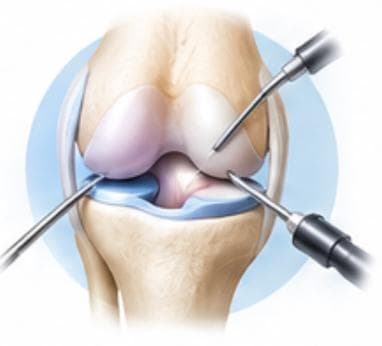
Arthroscopy is a minimally invasive surgical technique that uses a small camera and specialized instruments inserted through tiny incisions to diagnose and treat joint problems, commonly used for the knee, shoulder, and other joints.
Ready to talk?
Book a arthroscopy surgery consultation with Dr. Nirmal Patil, MS (Ortho) in Pimpri-Chinchwad.
How It's Performed
A small camera (arthroscope) is inserted into the joint through a tiny incision, projecting a magnified view onto a monitor. The surgeon then uses specialized instruments through additional small incisions to treat the problem identified.
What happens, step by step
- Assessment: examination and imaging (X-ray, MRI) plan the procedure.
- Anaesthesia: regional or general, depending on the joint and your health.
- Access: a camera (arthroscope) is placed through a small incision, with one or two more for instruments.
- Treatment: the surgeon inspects the joint and repairs, trims or clears the problem.
- Closure: the tiny incisions are closed and a light dressing applied; early movement follows.
Conditions Treated
- — Meniscus and cartilage injuries
- — Ligament injuries
- — Joint inflammation and loose bodies
- — Unexplained joint pain requiring direct visualisation
Benefits
- — Small incisions compared with open surgery
- — Less disruption to surrounding tissue in suitable cases
- — Faster recovery for many patients
- — Accurate diagnosis and treatment in the same procedure
Who May Need This Treatment
- — Joint problems needing both diagnosis and treatment through small incisions
- — Meniscus or ligament injuries of the knee
- — Shoulder conditions such as impingement, labral tears and cuff tears
- — Persistent joint symptoms not explained by examination and imaging alone
Recovery
Recovery depends on the specific joint and procedure performed; physiotherapy is often recommended to restore strength and function.
| When | What to expect |
|---|---|
| Days 1-7 | Home the same or next day; swelling control; gentle movement |
| Weeks 2-6 | Physiotherapy; return to desk work and light activity |
| Months 2-4 | Strength and function rebuilt, joint-specific |
| Beyond 4 months | Return to sport, later after repairs than after trims |
Typical recovery timeline — individual recovery varies
Is This Right For You?
Not every patient with meniscus and cartilage injuries or a related condition needs arthroscopy surgery. Dr. Nirmal Patil, MS (Ortho) reviews your symptoms, clinical examination, and imaging to confirm whether this is the right approach for you, or whether conservative treatment is more appropriate.
Alternatives to Consider First
Many joint problems settle with physiotherapy, activity changes, medication or injections. Arthroscopy is offered when a mechanical problem or a clear structural injury needs correcting.
Risks & Considerations
Arthroscopy is low-risk, but complications include infection, stiffness, blood clots, and injury to nerves or cartilage. Persisting symptoms can occur if arthritis, not a mechanical problem, is the main cause.
Questions to Ask at Your Consultation
- — Is arthroscopy likely to help my specific problem?
- — Will you repair or remove the damaged tissue?
- — How long until I am back to work and sport?
Arthroscopy Surgery in Wakad, Pune
Dr. Nirmal Patil, MS (Ortho) has 16 years of experience in spine and orthopaedic care and consults at Precision Ortho Spine & Rehab Clinic, Vishnu Dev Nagar, Wakad, Pune. Patients travel from Wakad, Hinjewadi, Baner, Pimple Saudagar, Punawale, Ravet and across Pimpri-Chinchwad. Every recommendation begins with a proper examination and imaging review, and you are given a clear explanation of your options, including non-surgical ones, before any decision is made.
Frequently Asked Questions
Which joints can be treated with arthroscopy?
Arthroscopy is most commonly used for the knee and shoulder, but can also be used for other joints such as the hip, elbow, wrist, and ankle depending on the condition.
Is arthroscopic surgery painful?
As with any surgery, some discomfort is expected and managed with medication; the smaller incisions used in arthroscopy generally result in less post-operative pain than equivalent open surgery.
How long does arthroscopic surgery take?
Duration depends on the joint and complexity of the procedure — your surgeon can give you a more specific estimate during consultation.
Is arthroscopy a day-care procedure?
Many arthroscopic procedures are performed as day care or short-stay surgery, though this depends on the specific joint and procedure involved.
How soon can I return to work after arthroscopy?
This varies by the joint treated, the procedure performed, and the physical demands of your work — your surgeon will advise a timeline specific to your situation.
Is arthroscopy painful?
Post-operative discomfort is usually mild to moderate and managed with medication, and is generally less than with open surgery.
Which joints can be treated with arthroscopy?
Knee and shoulder are most common, and hip, ankle, elbow and wrist can also be treated in selected cases.
Is arthroscopy suitable for knee arthritis?
Arthroscopic washout does not generally help arthritis on its own; it is used when a mechanical problem such as a torn meniscus is present.
Discuss your case with Dr. Nirmal Patil, MS (Ortho)
Every case is different. Book a consultation to review your symptoms and imaging.