Orthopaedics
Shoulder Arthroscopy
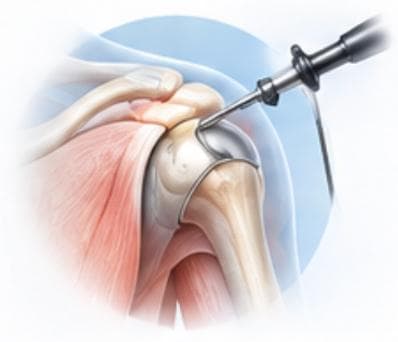
Shoulder arthroscopy is a minimally invasive procedure that uses a small camera and specialized instruments to diagnose and treat shoulder conditions such as rotator cuff tears, labral injuries, and shoulder instability.
Ready to talk?
Book a shoulder arthroscopy consultation with Dr. Nirmal Patil, MS (Ortho) in Pimpri-Chinchwad.
How It's Performed
The procedure is performed through small incisions around the shoulder using an arthroscope for visualisation and specialized instruments to repair or treat the affected structures.
What happens, step by step
- Assessment: examination and MRI or ultrasound identify the problem.
- Anaesthesia: general anaesthesia with a nerve block for pain relief.
- Access: small incisions around the shoulder allow the camera and instruments in.
- Treatment: the surgeon repairs the tendon or labrum, or smooths and clears the tissue causing pain.
- Sling and early physiotherapy are started according to what was done.
Conditions Treated
- — Rotator cuff tears
- — Labral tears, including SLAP tears
- — Shoulder impingement
- — Recurrent shoulder instability
Benefits
- — Small incisions compared with open shoulder surgery
- — Less disruption to surrounding soft tissue
- — Ability to address multiple shoulder problems in one procedure
Who May Need This Treatment
- — Rotator cuff tears needing repair
- — Shoulder impingement not settling with physiotherapy
- — Labral tears and recurrent shoulder instability
- — Stiff or painful shoulders needing release, or a biceps tendon problem
Recovery
Recovery involves a period of protected shoulder movement followed by structured physiotherapy to restore strength and range of motion, with timelines depending on the specific procedure performed.
| When | What to expect |
|---|---|
| Days 1-7 | Home the same or next day; sling; hand and elbow movement |
| Weeks 2-6 | Movement exercises; sling duration depends on the repair |
| Months 2-4 | Strengthening; return to desk work and light activity |
| Months 4-6 | Overhead activity and sport once cleared |
Typical recovery timeline — individual recovery varies
Is This Right For You?
Not every patient with rotator cuff tears or a related condition needs shoulder arthroscopy. Dr. Nirmal Patil, MS (Ortho) reviews your symptoms, clinical examination, and imaging to confirm whether this is the right approach for you, or whether conservative treatment is more appropriate.
Alternatives to Consider First
Physiotherapy, activity modification, medication and injections often help early impingement, partial tears and stiffness before surgery is considered.
Risks & Considerations
Risks include stiffness, re-tear or recurrent instability, infection and nerve irritation. Closely following the sling and rehabilitation plan improves results.
Questions to Ask at Your Consultation
- — Which structures will be repaired in my shoulder?
- — How long will I need a sling?
- — When can I return to overhead work or sport?
Shoulder Arthroscopy in Wakad, Pune
Dr. Nirmal Patil, MS (Ortho) has 16 years of experience in spine and orthopaedic care and consults at Precision Ortho Spine & Rehab Clinic, Vishnu Dev Nagar, Wakad, Pune. Patients travel from Wakad, Hinjewadi, Baner, Pimple Saudagar, Punawale, Ravet and across Pimpri-Chinchwad. Every recommendation begins with a proper examination and imaging review, and you are given a clear explanation of your options, including non-surgical ones, before any decision is made.
Frequently Asked Questions
What shoulder conditions can arthroscopy treat?
Shoulder arthroscopy can be used to treat rotator cuff tears, labral tears, shoulder impingement, instability, and other conditions affecting the shoulder joint and surrounding structures.
How long does shoulder arthroscopy take?
Duration depends on the specific procedure(s) being performed during the surgery — your surgeon can provide an estimate specific to your case.
Will I need physiotherapy after shoulder arthroscopy?
Yes, physiotherapy is typically an important part of recovery to restore shoulder strength, motion, and function after the procedure.
Is shoulder arthroscopy a day-care procedure?
It is often performed as a day-care or short-stay procedure, though this depends on the specific surgery performed and the patient's individual situation.
When can I drive again after shoulder arthroscopy?
This depends on which shoulder was operated on, the specific procedure, and your recovery — your surgeon will advise when it is safe to resume driving.
Why is shoulder arthroscopy preferred over open surgery?
It uses smaller incisions, causes less muscle damage and usually means less pain and an easier early recovery.
How long is the sling needed after shoulder arthroscopy?
It depends on what was done: a few days to a couple of weeks for cleaning procedures, and about six weeks after a tendon repair.
Can I go home the same day after shoulder arthroscopy?
Many patients go home the same day or the next day, depending on health and the procedure.
Discuss your case with Dr. Nirmal Patil, MS (Ortho)
Every case is different. Book a consultation to review your symptoms and imaging.