Spine Surgery
Endoscopic Spine Surgery
Endoscopic spine surgery is a minimally invasive technique that accesses the spine through a single small incision using a camera and specialised instruments — used to treat conditions such as herniated discs and spinal stenosis with less disruption to surrounding tissue than traditional open surgery.
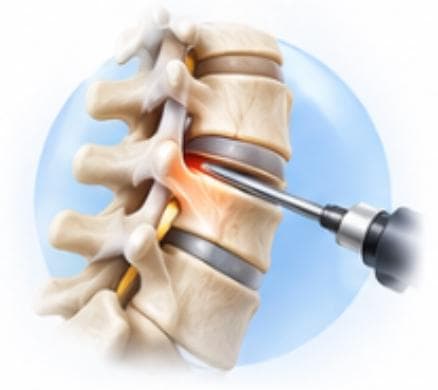
How It's Performed
The surgeon inserts a thin endoscope — a tube fitted with a high-definition camera and light — through a single small incision, guided to the affected area of the spine under imaging. Specialised micro-instruments are passed through the same channel to remove or treat the source of compression.
Conditions Treated
- — Herniated or slipped disc
- — Sciatica from nerve compression
- — Selected cases of spinal stenosis
- — Lumbar radiculopathy
Benefits
- — Small incision, often under 1 cm
- — Less disruption to surrounding muscle
- — Shorter hospital stay in suitable cases
- — Faster return to routine activity
Recovery
Because the approach uses one small access point rather than a longer incision, it is often described as stitchless or keyhole surgery. Many patients begin walking soon after the procedure, with activity increased gradually under the surgeon's guidance.
Is This Right For You?
Not every patient with herniated or slipped disc or a related condition needs endoscopic spine surgery. Dr. Nirmal Patil, MS (Ortho) reviews your symptoms, clinical examination, and imaging to confirm whether this is the right approach for you, or whether conservative treatment is more appropriate.
Risks & Considerations
As with any surgical procedure, endoscopic spine surgery carries risks, which can include infection, bleeding, and the possibility that symptoms do not fully resolve. These risks, along with the alternatives, are discussed in detail during consultation before any decision to proceed.
Frequently Asked Questions
What is endoscopic spine surgery?
It is a minimally invasive technique in which a surgeon accesses the spine through a single small incision, often under 1 cm, using a thin tube fitted with a camera and specialised instruments.
How is it different from traditional open spine surgery?
Open spine surgery typically requires a larger incision and more disruption to surrounding muscle. Endoscopic surgery uses a camera and instruments through a keyhole incision instead, which is why it's often called 'stitchless' surgery.
Who is a candidate for endoscopic spine surgery?
It is commonly considered for a herniated or slipped disc, sciatica, or certain cases of spinal stenosis, particularly when conservative treatment hasn't provided sufficient relief. An in-person evaluation with imaging is needed to confirm candidacy.
Is endoscopic spine surgery painful?
Some post-operative discomfort is expected and managed with medication. Many patients report less pain than with open surgery, owing to the smaller incision.
How long is the hospital stay for endoscopic spine surgery?
It is often performed as a short-stay or day-care procedure, though the exact duration depends on the specific case.
Is endoscopic spine surgery covered by insurance in India?
Coverage depends on your specific policy and insurer. The clinic can help you understand the documentation needed for a claim — contact us to discuss your situation.
Discuss your case with Dr. Nirmal Patil, MS (Ortho)
Every case is different. Book a consultation to review your symptoms and imaging.