Orthopaedics
Meniscus Tear Treatment
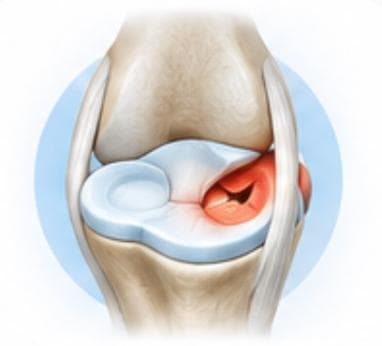
A meniscus tear is damage to the cartilage that cushions the knee joint. Depending on the tear pattern and patient factors, it may be treated conservatively or with arthroscopic surgery to repair or trim the damaged tissue.
How It's Performed
Arthroscopic meniscus surgery uses small incisions and a camera (arthroscope) to visualise the tear and either repair it with sutures or trim away the damaged portion, depending on the tear's location and pattern.
Conditions Treated
- — Degenerative or traumatic meniscus tears
- — Knee locking or catching sensations
- — Joint-line pain and swelling
- — Reduced knee range of motion from a torn meniscus
Benefits
- — Pain relief and restored knee mechanics
- — Preservation of joint cartilage where the meniscus can be repaired
- — Small incisions with arthroscopic technique
Recovery
Recovery varies depending on whether the meniscus was repaired or partially removed — repairs generally need a longer, more protected recovery, while partial removal often allows a faster return to activity. Physiotherapy supports the process either way.
Is This Right For You?
Not every patient with degenerative or traumatic meniscus tears or a related condition needs meniscus tear treatment. Dr. Nirmal Patil, MS (Ortho) reviews your symptoms, clinical examination, and imaging to confirm whether this is the right approach for you, or whether conservative treatment is more appropriate.
Risks & Considerations
As with any surgical procedure, meniscus tear treatment carries risks, which can include infection, bleeding, and the possibility that symptoms do not fully resolve. These risks, along with the alternatives, are discussed in detail during consultation before any decision to proceed.
Frequently Asked Questions
Can a meniscus tear heal without surgery?
Some tears, particularly small or stable ones in the well-vascularised outer portion of the meniscus, may improve with conservative treatment. Surgery is considered when symptoms persist or the tear pattern is not likely to heal on its own.
What's the difference between meniscus repair and trimming?
Repair stitches the torn tissue back together to preserve it, while trimming (partial meniscectomy) removes the damaged portion. The choice depends on the tear's location, pattern, and the patient's age and activity level.
How soon can I walk after meniscus surgery?
This depends on whether a repair or trimming was performed — trimming often allows earlier weight-bearing, while repairs typically require a period of protected movement to allow healing.
What are the symptoms of a meniscus tear?
Common symptoms include knee pain, swelling, stiffness, a catching or locking sensation, and difficulty fully straightening the knee.
Is meniscus surgery done as day care?
Arthroscopic meniscus surgery is often performed as a day-care or short-stay procedure, though this depends on the individual case and surgeon's assessment.
Discuss your case with Dr. Nirmal Patil, MS (Ortho)
Every case is different. Book a consultation to review your symptoms and imaging.