Orthopaedics
Knee Replacement Surgery
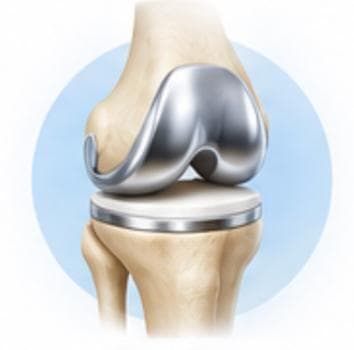
Total knee replacement is a surgical procedure that replaces the damaged surfaces of the knee joint with artificial implants, performed to relieve pain and restore function in patients with severe knee arthritis or joint damage.
How It's Performed
Under anesthesia, the damaged cartilage and bone at the end of the femur and top of the tibia are removed and resurfaced with metal and plastic prosthetic components that recreate the knee joint's movement.
Conditions Treated
- — Severe osteoarthritis of the knee
- — Rheumatoid arthritis affecting the knee
- — Post-traumatic arthritis
- — Advanced joint degeneration unresponsive to conservative treatment
Benefits
- — Significant relief from knee pain
- — Improved mobility and joint function
- — Correction of knee deformity in suitable cases
- — Ability to resume daily activities
Recovery
Recovery typically involves early mobilization with a physiotherapist, a structured rehabilitation programme, and a gradual return to normal activity over several weeks to months, depending on the individual.
Is This Right For You?
Not every patient with severe osteoarthritis of the knee or a related condition needs knee replacement surgery. Dr. Nirmal Patil, MS (Ortho) reviews your symptoms, clinical examination, and imaging to confirm whether this is the right approach for you, or whether conservative treatment is more appropriate.
Risks & Considerations
As with any surgical procedure, knee replacement surgery carries risks, which can include infection, bleeding, and the possibility that symptoms do not fully resolve. These risks, along with the alternatives, are discussed in detail during consultation before any decision to proceed.
Frequently Asked Questions
What is total knee replacement surgery?
It is a procedure that replaces the worn or damaged surfaces of the knee joint with an artificial implant to relieve pain and restore movement.
Who needs a knee replacement?
It is typically considered for patients with severe knee arthritis or joint damage causing significant pain and disability that has not responded to medication, physiotherapy, or other conservative treatments.
How long do knee implants typically last?
Modern knee implants are designed to last many years, though the exact lifespan varies with the patient's activity level, weight, and overall health — your surgeon can discuss expectations specific to your case.
Is knee replacement surgery painful?
As with any major surgery, some post-operative pain is expected and is managed with medication; most patients find pain improves significantly compared with their pre-surgery arthritis pain.
When can I walk after knee replacement surgery?
Many patients begin walking with support, such as a walker, within a day of surgery, with weight-bearing and mobility increasing gradually under physiotherapy guidance.
Discuss your case with Dr. Nirmal Patil, MS (Ortho)
Every case is different. Book a consultation to review your symptoms and imaging.