Spine Surgery
Minimally Invasive Spine Surgery (MISS)
Minimally invasive spine surgery (MISS) covers a range of keyhole techniques used to treat spinal conditions through smaller incisions than traditional open surgery, aiming to reduce muscle disruption and support faster recovery.
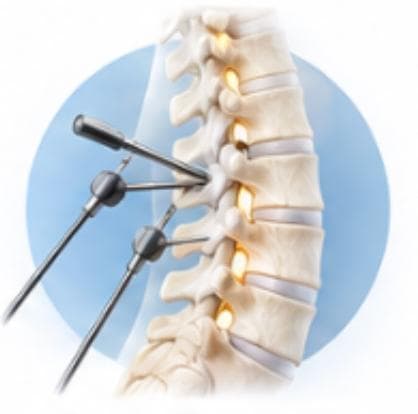
How It's Performed
MISS techniques use specialised retractors, imaging guidance, and, in some cases, an endoscope or microscope to access and treat the spine through small incisions, minimising disruption to the muscles surrounding the spine.
Conditions Treated
- — Herniated or slipped disc
- — Spinal stenosis
- — Spondylolisthesis
- — Selected degenerative spine conditions
Benefits
- — Smaller incisions than open surgery
- — Reduced muscle and soft-tissue disruption
- — Often shorter hospital stays
- — Faster return to daily activity in suitable cases
Recovery
Recovery is generally supported by early mobilisation and physiotherapy, with the specific timeline depending on which MISS technique was used and the condition treated.
Is This Right For You?
Not every patient with herniated or slipped disc or a related condition needs minimally invasive spine surgery (miss). Dr. Nirmal Patil, MS (Ortho) reviews your symptoms, clinical examination, and imaging to confirm whether this is the right approach for you, or whether conservative treatment is more appropriate.
Risks & Considerations
As with any surgical procedure, minimally invasive spine surgery (miss) carries risks, which can include infection, bleeding, and the possibility that symptoms do not fully resolve. These risks, along with the alternatives, are discussed in detail during consultation before any decision to proceed.
Frequently Asked Questions
What does minimally invasive spine surgery mean?
It refers to a group of surgical techniques that treat spinal conditions through smaller incisions than traditional open surgery, using specialised instruments and imaging guidance to minimise tissue disruption.
Is MISS suitable for all spine conditions?
Not every spinal condition is suitable for a minimally invasive approach — your surgeon will assess your specific diagnosis and imaging to determine the most appropriate technique.
How does MISS recovery compare to open spine surgery?
Many patients experience less post-operative pain and a faster initial recovery with minimally invasive techniques compared with equivalent open surgery, though outcomes depend on the individual case.
What spinal conditions can MISS treat?
MISS techniques can be used to treat conditions including herniated discs, spinal stenosis, and spondylolisthesis, among others.
How do I know if I need minimally invasive spine surgery?
A consultation including clinical examination and imaging (such as MRI) is needed to determine whether your condition is suitable for a minimally invasive approach or requires a different treatment path.
Discuss your case with Dr. Nirmal Patil, MS (Ortho)
Every case is different. Book a consultation to review your symptoms and imaging.