Orthopaedics
Fracture & Trauma Care
Fracture and trauma care covers the diagnosis and treatment of broken bones and orthopaedic injuries, ranging from cast immobilisation for simple fractures to surgical fixation for complex or unstable breaks.
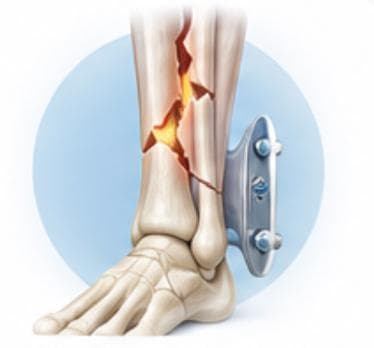
How It's Performed
Treatment depends on the fracture's location, pattern, and severity. Simple fractures may be managed with casting or bracing, while complex or displaced fractures may require surgical fixation with plates, screws, rods, or external fixators to restore alignment and stability.
Conditions Treated
- — Simple and complex fractures
- — Dislocations
- — Soft-tissue injuries associated with trauma
- — Non-union or delayed-healing fractures
Benefits
- — Treatment tailored to fracture type and severity
- — Options ranging from non-surgical to surgical fixation
- — Aims to restore alignment, stability, and function
- — Structured rehabilitation to support recovery
Recovery
Recovery timelines vary widely depending on the fracture and treatment used, ranging from weeks for simple fractures to several months for complex injuries, with physiotherapy often supporting the return to full function.
Is This Right For You?
Not every patient with simple and complex fractures or a related condition needs fracture & trauma care. Dr. Nirmal Patil, MS (Ortho) reviews your symptoms, clinical examination, and imaging to confirm whether this is the right approach for you, or whether conservative treatment is more appropriate.
Risks & Considerations
As with any surgical procedure, fracture & trauma care carries risks, which can include infection, bleeding, and the possibility that symptoms do not fully resolve. These risks, along with the alternatives, are discussed in detail during consultation before any decision to proceed.
Frequently Asked Questions
Does every fracture need surgery?
No — many fractures heal well with casting, bracing, or splinting alone. Surgery is generally considered for fractures that are displaced, unstable, or involve a joint surface.
How long does a broken bone take to heal?
Healing time varies by the bone involved, the fracture type, and the patient's age and health — simple fractures may heal in a few weeks, while complex fractures can take several months.
What is fracture fixation surgery?
It's a surgical procedure that uses implants such as plates, screws, or rods to hold broken bone fragments in the correct position while they heal.
When should I see a doctor after an injury?
Seek prompt medical attention for any suspected fracture — signs include severe pain, swelling, deformity, or inability to bear weight or use the affected limb.
Will I need physiotherapy after a fracture?
Physiotherapy is often recommended after fracture treatment to restore strength, range of motion, and function, particularly for fractures near a joint or after surgical fixation.
Discuss your case with Dr. Nirmal Patil, MS (Ortho)
Every case is different. Book a consultation to review your symptoms and imaging.