Orthopaedics
Shoulder Replacement Surgery
Shoulder replacement surgery replaces damaged shoulder joint surfaces with prosthetic components to relieve pain and restore function in patients with severe shoulder arthritis or joint damage.
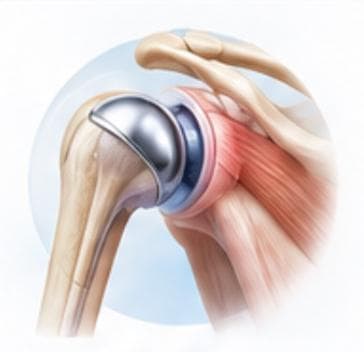
How It's Performed
Damaged joint surfaces are replaced with metal and plastic implants. The specific technique — anatomic or reverse shoulder replacement — depends on the underlying condition, particularly the state of the rotator cuff.
Conditions Treated
- — Severe shoulder osteoarthritis
- — Rotator cuff arthropathy
- — Complex shoulder fractures in selected patients
- — Avascular necrosis of the shoulder joint
Benefits
- — Significant pain relief
- — Improved shoulder movement and function
- — Implant options tailored to the underlying condition
Recovery
Recovery involves a structured physiotherapy programme to gradually regain shoulder strength and motion over several weeks to months.
Is This Right For You?
Not every patient with severe shoulder osteoarthritis or a related condition needs shoulder replacement surgery. Dr. Nirmal Patil, MS (Ortho) reviews your symptoms, clinical examination, and imaging to confirm whether this is the right approach for you, or whether conservative treatment is more appropriate.
Risks & Considerations
As with any surgical procedure, shoulder replacement surgery carries risks, which can include infection, bleeding, and the possibility that symptoms do not fully resolve. These risks, along with the alternatives, are discussed in detail during consultation before any decision to proceed.
Frequently Asked Questions
What is the difference between anatomic and reverse shoulder replacement?
Anatomic replacement recreates the natural shoulder anatomy and relies on an intact rotator cuff, while reverse shoulder replacement changes the joint's mechanics to work even when the rotator cuff is damaged or deficient.
Who is a candidate for shoulder replacement?
Candidates typically have severe shoulder pain and disability from arthritis or joint damage that has not responded to conservative treatment.
How long does recovery take after shoulder replacement?
Recovery is gradual, with physiotherapy playing a central role over several weeks to months to restore strength and range of motion.
Will I regain full range of motion after shoulder replacement?
Improvement in pain and function is expected, though the degree of motion regained varies by patient, the type of replacement performed, and pre-surgical shoulder condition.
How long do shoulder implants last?
Modern shoulder implants are designed for long-term use, though longevity varies with activity level and individual factors — your surgeon can discuss expectations for your case.
Discuss your case with Dr. Nirmal Patil, MS (Ortho)
Every case is different. Book a consultation to review your symptoms and imaging.